

If you want to import from China to Kenya, this guide will help you avoid costly mistakes and make better decisions from the start. Shipping is not just about moving goods from one country to another. It involves choosing the right supplier, understanding the full China to Kenya shipping cost, selecting the best shipping method, and working with the right partners. When you understand how each part works, you save time, protect your money, and run a more profitable business.
Many Kenyan businesses are already importing from China, and they are doing it because it makes business sense. Products in China are often cheaper to manufacture, which means you can buy at a lower price and sell at a better margin. You also get access to a wide range of products that may not be available locally. This gives you an advantage in the market, especially if you are in retail, construction, or wholesale. Businesses that understand shipping from China to Kenya well are able to restock faster, price competitively, and grow more consistently.
But here is the part many people don’t talk about.
A large number of beginners lose money in their first few shipments. Not because importing does not work—but because they go in without the right information. They rely on guesswork, choose the wrong suppliers, underestimate costs, or work with the wrong logistics partners. One small mistake in the process can lead to delays, damaged goods, or unexpected charges that eat into your profit.
So why does this happen?
Most new importers do not fully understand the full picture. They may know how to place an order, but they don’t clearly understand the real China to Kenya shipping cost, which includes more than just the freight fee. They are not familiar with the step-by-step process of moving goods from a factory in China to their location in Kenya. They are also not aware of common risks such as supplier fraud, poor product quality, customs delays, or hidden logistics costs. And most importantly, they don’t know who to trust—whether it is a supplier, a freight forwarding China to Kenya company, or a clearing and forwarding Kenya China agent.
This guide is designed to solve all of that.
Instead of giving you surface-level information, it walks you through the real process in a clear and practical way. You will learn how shipping works from start to finish, how to estimate your true costs, how to choose between air freight China to Kenya and sea freight China to Kenya, and when to use door to door shipping China to Kenya to simplify the process. You will also understand the role of a China sourcing agent Kenya businesses rely on, and how to avoid the common mistakes that cause losses.
By the end of this guide, you will not just understand how to import—you will know how to do it properly, with confidence, and in a way that supports the growth of your business.
Who This Guide Is For
This guide is written for business owners and buyers in Kenya who are either already importing or planning to start.
It is especially useful for:
Hardware store owners
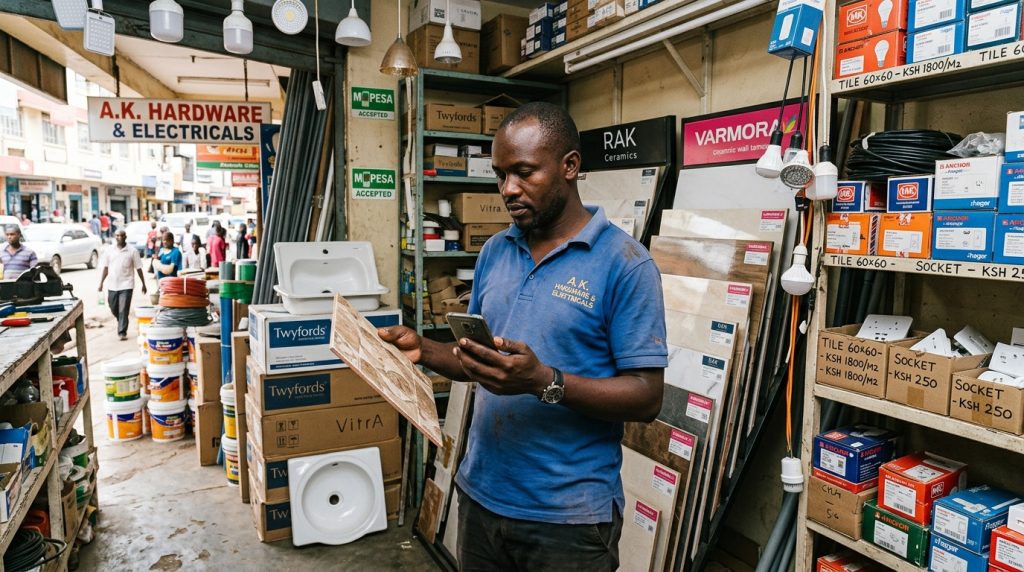
If you sell tiles, sanitary ware, lighting, electrical fittings, or general hardware products, China is one of your main sourcing markets. This guide helps you understand how to import in bulk without overpaying or getting low-quality goods.
Contractors and property developers
If you are building apartments, offices, or commercial spaces, you often need construction materials in large volumes. This guide helps you understand how to manage China to Kenya shipping cost, avoid delays, and ensure materials arrive on time for your project.
Retail and wholesale businesses
If you import products like electronics, home goods, or general merchandise for resale, this guide helps you understand how to scale safely without losing money on hidden costs or bad suppliers.
First-time importers and growing businesses
If you are new to importing, or you have tried before and lost money, this guide will help you avoid common mistakes and build a more reliable system.
If your goal is to import safely, reduce risk, and understand the full process of shipping from China to Kenya, this guide is for you.

How Shipping from China to Kenya Really Works (End-to-End Process Explained)
To properly understand shipping from China to Kenya, you need to see it as a full system, not just transport. Goods go through sourcing, verification, shipping, and customs before they reach your business. Each stage affects your cost, timing, and risk.
Step 1: Product sourcing
Everything starts with choosing the right supplier in China. This decision determines your product quality, price, and long-term reliability.
In China, suppliers are not all the same. Some are real factories, others are trading companies, and some are middlemen who simply resell products. The challenge is that they can all appear legitimate online.
This is where many importers make mistakes. They choose based on price alone, without confirming who they are actually dealing with. A lower price from the wrong supplier often leads to poor quality or delayed production.
This is why many businesses rely on a China sourcing agent Kenya importers trust. The agent physically verifies suppliers, checks factory capability, and reduces the risk of fraud before any money is sent.
Step 2: Price negotiation and order confirmation
Once you find a supplier, the next step is negotiation. But this is not just about pushing for a lower price. It is about making sure every detail is clearly agreed before production starts.
You need to confirm product specifications, quantity, packaging standards, and payment structure. For example, some suppliers offer low prices but reduce material quality or change packaging to cut costs. If this is not agreed upfront, you may only discover it after shipment.
Most problems in import from China to Kenya happen at this stage because buyers rush into payment without clear written agreements.
Step 3: Quality inspection
Before anything is shipped, goods should be checked. This step is often skipped, especially by first-time importers, but it is one of the most important.
Inspection ensures that the products match what you ordered in terms of quality, quantity, and packaging. It also helps detect defects early, while changes are still possible.
Once goods leave China, fixing mistakes becomes very expensive or impossible. That is why experienced importers always inspect before release, especially for construction materials, electronics, or bulk goods.
Step 4: Choosing the shipping method
At this stage, you decide how your goods will move from China to Kenya. This choice has a direct impact on both cost and delivery time.
You typically choose between air freight and sea freight.
Air freight China to Kenya is used when speed is important. It is faster but more expensive and usually suitable for smaller or urgent shipments.
Sea freight China to Kenya is the opposite. It takes longer but is far more cost-effective for bulk goods such as tiles, furniture, or hardware materials.
Choosing the wrong method can either increase your costs or delay your business operations.
Step 5: Freight forwarding
A freight forwarding China to Kenya company plays a coordination role between your supplier and the shipping system.
They do not just move goods. They arrange cargo booking, prepare shipping documents, coordinate with airlines or shipping lines, and track your shipment throughout the journey.
Without a proper freight forwarder, shipments often face delays due to missing paperwork or poor coordination between parties.
Step 6: Shipping journey
Once everything is arranged, goods leave China and enter the international shipping system. They usually move from the factory to a local export warehouse, then to a Chinese port such as Shenzhen or Ningbo for sea freight, or an airport for air freight.
From there, goods are transported internationally to Kenya, mainly through Mombasa port for sea freight or Nairobi cargo terminals for air shipments.
During this stage, timing depends on shipping schedules, weather conditions, and customs clearance procedures at both ends.
Step 7: Clearing and forwarding in Kenya
When goods arrive in Kenya, they must go through customs before they are released. This process is known as clearing and forwarding Kenya China operations.
Here, customs authorities verify documents, check declared values, and classify goods using HS codes to determine taxes. Import duty, VAT, and other government charges are then applied.
Delays usually happen when documents are incorrect, goods are misclassified, or values are not properly declared. That is why professional clearing agents are important—they ensure compliance and smooth release of goods.
Step 8: Final delivery
After clearance, goods are released for final delivery. Depending on your arrangement, they may be transported directly to your warehouse, shop, or construction site.
At this point, your import cycle is complete. However, profitability depends on how well each previous step was managed, from sourcing to shipping and clearance.
China to Kenya Shipping Cost (Full Breakdown Explained Clearly)
Understanding China to Kenya shipping cost is essential if you want to run a profitable import business. Many importers fail because they focus only on shipping fees and ignore the full cost structure.
In reality, shipping cost is only one part of the total import cost.
Product cost
This is the amount you pay the supplier in China. It depends on the type of product, quality level, and order quantity. Larger orders usually reduce the unit price, but require higher upfront investment.
International shipping cost
This is the cost of moving goods from China to Kenya. It is calculated based on weight or volume, depending on whether you are using air or sea freight. Sea freight is usually cheaper for large shipments, while air freight is more expensive but faster.
Customs duty and taxes
When goods enter Kenya, the government charges import duty based on product category and value. VAT and other import levies are also added. These charges vary depending on the type of goods being imported.
Clearing and forwarding charges
These are fees paid to agents who handle customs documentation and release your goods from the port. Costs depend on shipment size and complexity.
Local transport
Once goods are cleared, they must be delivered to your final destination. This includes transport from the port or airport to your warehouse, shop, or site.
Key insight
The most important thing to understand is that your true cost is not shipping alone. It is the full landed cost, which includes everything required to get goods into your hands in Kenya.
If you only calculate shipping, you risk under pricing your products and losing profit without realizing it.
Air Freight China to Kenya (When Speed Matters Most)
Air freight China to Kenya is the fastest way to move goods between the two countries. It is commonly used by businesses that cannot afford delays in stock delivery or those dealing with high-value, lightweight products.
Air freight is not just about speed – it is about timing your business correctly. For example, if you are restocking fast-moving items like electronics, accessories, or urgent construction supplies, waiting 30–40 days for sea freight could mean lost sales. In such cases, air freight helps you stay in business continuity.
However, speed comes at a cost. Air freight is significantly more expensive than sea freight because pricing is calculated based on either actual weight or volumetric weight (whichever is higher). This means bulky but light items can still be expensive to ship.
Air freight is best used when the value of your goods justifies the higher shipping cost. If your profit margins are strong, or if you are shipping small but high-value items, then this method makes sense. But if you are importing heavy construction materials or bulk stock, air freight can reduce your profitability quickly.
In short, air freight is a tool for speed, not scale.
Sea Freight China to Kenya (Best Option for Bulk Imports)
Sea freight China to Kenya is the most widely used method for businesses importing large volumes of goods. It is especially common in construction, retail wholesale, and hardware supply businesses.
Unlike air freight, sea freight is designed for scale. It allows importers to move large quantities at a much lower cost per unit. This is why most importers of tiles, sanitary ware, furniture, and electrical fittings prefer sea freight.
The trade-off, however, is time. Sea freight typically takes between 25 to 45 days depending on shipping schedules, port congestion, and route availability. This requires proper planning, especially for businesses that rely on consistent stock flow.
There are two main types of sea freight:
- LCL (Less than Container Load) where your goods share space in a container with other importers. This is ideal for small or medium shipments.
- FCL (Full Container Load) where you rent a full container. This is more efficient for large shipments and often reduces risk of damage.
For businesses aiming to scale, sea freight is almost always the most cost-effective option. The key is planning ahead so that delays do not affect your supply chain.
Door to Door Shipping China to Kenya (Simplified Import Solution)
Door to door shipping China to Kenya is a full-service solution where everything is handled for you from the supplier’s location all the way to your final delivery point in Kenya.
This method is becoming increasingly popular among small and medium businesses because it removes the complexity of dealing with multiple parties. Instead of coordinating suppliers, freight forwarders, and clearing agents separately, you work with one provider who manages the entire process.
The process includes pickup from the supplier, export handling in China, international shipping, customs clearance in Kenya, and final delivery to your warehouse or shop.
The biggest advantage of this method is predictability. You get a clearer idea of total cost, fewer hidden charges, and less risk of delays caused by miscommunication between different service providers.
For businesses that are still learning how import from China to Kenya works, door to door shipping is often the safest entry point. It reduces operational stress and allows you to focus on sales instead of logistics management.
Freight Forwarding China to Kenya (The Coordination Engine Behind Shipping)
A freight forwarding China to Kenya service acts as the operational link between your supplier in China and your business in Kenya. Without it, international shipping becomes disorganized and high-risk.
Freight forwarders do not own ships or planes. Instead, they organize and manage the entire logistics process on your behalf. This includes booking cargo space, preparing export documentation, coordinating pickup from suppliers, and ensuring your shipment follows the correct shipping route.
One of their most important roles is documentation. International trade requires accurate paperwork, and even small mistakes can lead to delays or penalties. A good freight forwarder ensures everything is correctly prepared before goods leave China.
They also help you choose between air and sea freight based on cost, urgency, and cargo type. This guidance is important because choosing the wrong method can affect your entire import budget.
In simple terms, a freight forwarder reduces confusion, prevents delays, and ensures your goods move smoothly across borders.
Clearing and Forwarding Kenya China (What Happens When Goods Arrive in Kenya)
Once goods arrive in Kenya, they enter one of the most important stages of the entire process—customs clearance. This is handled through clearing and forwarding Kenya China operations.
At this stage, Kenyan authorities inspect imported goods to ensure they match the declared documents. They check invoices, packing lists, and classify goods using HS codes, which determine how much tax you will pay.
Customs duty, VAT, and other import charges are then calculated based on the product category and declared value. If everything is correct, goods are released for delivery.
However, this is also where many importers face problems. Delays often happen when documents are incomplete, product values are misdeclared, or HS codes are incorrectly assigned. Even small errors can lead to additional charges or goods being held for inspection.
That is why experienced importers work with clearing agents who understand the system. A good agent ensures compliance, reduces delays, and helps avoid unnecessary penalties.
This stage is critical because even if your shipping process is perfect, poor clearance handling can still delay your business.
H2: How to Import Goods from China to Kenya (Practical Strategy for Success)
Understanding how to import goods from China to Kenya is not just about following steps—it is about building a system that protects your money and supports your business growth.
The first and most important principle is to start small. Many importers fail because they place large orders before testing suppliers or understanding demand in the Kenyan market. A smaller first shipment allows you to test product quality, shipping timelines, and total landed cost.
The second principle is focusing on total cost, not just purchase price. A cheap product can become expensive once shipping, taxes, and clearing fees are added. Successful importers always calculate full landed cost before committing to large orders.
The third principle is building strong supplier relationships. Reliable suppliers lead to consistent product quality and better pricing over time. This reduces risk and improves long-term profitability.
Finally, working with professionals such as sourcing agents and freight forwarders helps reduce operational mistakes. Importing is not just buying—it is coordination across multiple systems.
China Sourcing Agent Kenya (Why It Matters More Than Most Importers Realize)
A China sourcing agent Kenya businesses use is often the difference between a successful import and a costly mistake.
Many people think importing starts with finding a supplier online. In reality, the hardest part is not finding suppliers—it is verifying them.
China has thousands of suppliers selling similar products, but not all of them are factories. Some are trading companies, and others are middlemen who resell goods at higher prices without controlling quality. On the surface, they may all look legitimate, especially on online platforms.
This is where sourcing agents play a critical role.
A good sourcing agent helps you move beyond guesswork by physically verifying suppliers, checking production capability, and ensuring the factory is real. They also help you negotiate better prices because they understand local market rates and supplier behavior.
More importantly, they reduce risk before you send money. In many cases, importers lose money not during shipping, but at the sourcing stage—by paying the wrong supplier or ordering poor-quality goods.
A sourcing agent also helps coordinate product inspection before shipping. This ensures what you ordered is exactly what is being sent. For businesses importing construction materials, hardware, or bulk goods, this step protects your investment.
In simple terms, a sourcing agent acts as your eyes and protection in China.
Biggest Mistakes Kenyan Importers Make When Shipping from China
Most problems in import from China to Kenya are not caused by shipping companies or customs—they are caused by decisions made before shipping even begins.
One of the most common mistakes is choosing a supplier based only on price. A cheaper price often hides problems such as lower quality materials, incorrect specifications, or unreliable production timelines. What looks like a saving at the start can become a loss later.
Another major mistake is skipping product inspection. Many importers assume that once they place an order, the supplier will deliver exactly what was agreed. Unfortunately, without inspection, there is no guarantee of quality consistency. This is especially risky for items like tiles, electrical fittings, or sanitary ware where defects are not always visible in photos.
A third mistake is misunderstanding total cost. Many businesses only calculate shipping fees and ignore customs duty, VAT, clearing charges, and local transport. This leads to incorrect pricing and reduced profit margins when goods finally arrive.
Another issue is poor planning of timelines. Shipping from China is not instant. Sea freight alone can take over a month. Businesses that do not plan ahead often face stock shortages, delayed projects, or lost sales opportunities.
Finally, working with unreliable logistics partners is a serious risk. If your freight forwarding China to Kenya or clearing partner is inexperienced, your goods may be delayed, misdeclared, or incorrectly processed at customs.
These mistakes are avoidable, but only when the importer understands the full process before committing capital.
How to Reduce Risk When Shipping from China to Kenya
Successful importers do not eliminate risk completely—they manage it properly.
The first way to reduce risk is to work only with verified suppliers and, where possible, use inspection before shipment. This ensures that what you ordered is what you receive.
The second is choosing the right shipping structure. For example, using door to door shipping China to Kenya reduces complexity because one provider manages the entire process. This reduces miscommunication between multiple parties.
The third is planning shipments early. Importing is time-sensitive, especially for businesses that rely on stock availability. Delays in shipping or clearance can affect sales cycles or project timelines.
Another important step is understanding full landed cost before ordering. When you know your total cost upfront, you avoid pricing mistakes that reduce profitability.
Finally, working with experienced logistics partners helps you avoid common errors in documentation, customs classification, and shipping coordination. This is where freight forwarding China to Kenya professionals add real value.
Risk cannot be eliminated in international trade, but it can be controlled with the right system.
Which Shipping Method Is Best for You?
There is no single best method for shipping from China to Kenya. The right option depends on your business needs, product type, and urgency.
If your shipment is urgent or high value but low volume, air freight China to Kenya is usually the best option. It allows you to restock quickly and avoid delays, even though it is more expensive.
If you are importing in bulk—especially heavy goods like construction materials, furniture, or hardware products—then sea freight China to Kenya is the most cost-effective option. It reduces your cost per unit and supports long-term scaling.
If you want simplicity and less operational involvement, door to door shipping China to Kenya is the most convenient. It allows you to focus on your business while a single provider handles sourcing, shipping, and delivery.
The key is not choosing the cheapest method, but choosing the most sustainable one for your business model.
Why Businesses Work with Us
Importing successfully from China requires more than just shipping—it requires coordination, verification, and accountability at every stage.
We support Kenyan businesses by handling the entire import process in a structured and transparent way.
This includes product sourcing, where we help identify reliable suppliers and reduce the risk of dealing with unverified factories. We also assist with supplier verification to ensure you are getting the correct quality and pricing before production begins.
We manage freight forwarding China to Kenya to ensure your goods are shipped efficiently and correctly documented. We also handle clearing and forwarding Kenya China processes, ensuring smooth customs clearance and reducing the risk of delays or penalties.
For clients who prefer simplicity, we offer door to door shipping China to Kenya, where everything is handled from supplier pickup to final delivery.
What makes the difference is not just the service, but the approach. We focus on transparency in pricing, clear communication, and reliable timelines so businesses can plan confidently.
H2: Ready to Start Shipping from China to Kenya?
If you are planning to import from China to Kenya, the most important step is not placing an order—it is making sure your process is correct from the beginning.
A successful import is built on:
- Correct supplier selection
- Accurate cost planning
- Reliable shipping method
- Proper customs handling
When these elements are in place, importing becomes predictable and profitable.
If you want to avoid costly mistakes and work with a structured process from sourcing to delivery, we can support you at every stage.
👉 Contact us today to get a clear quotation and start your import process with confidence.