
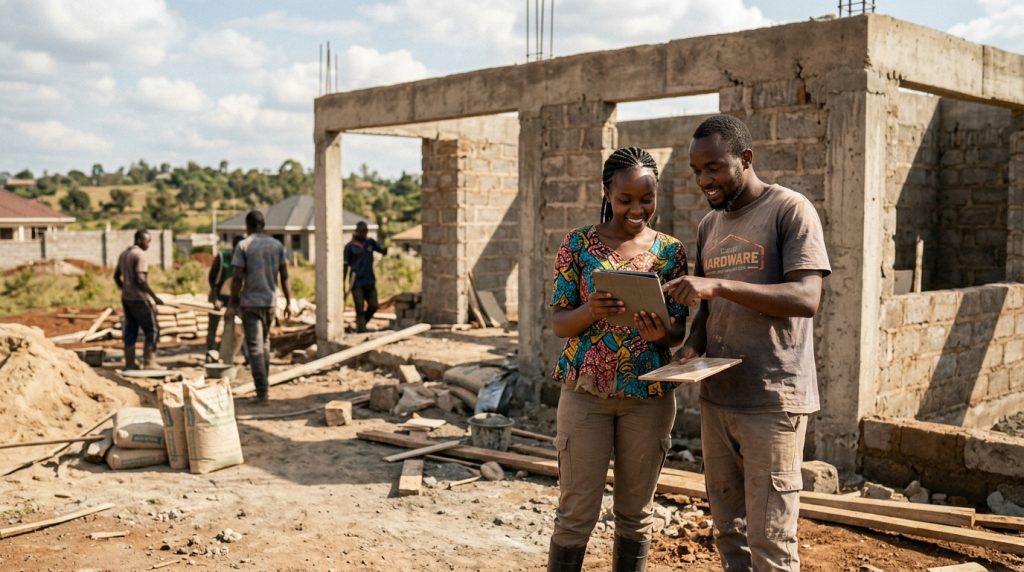
Import building materials from China to Kenya has become an increasingly popular solution for homeowners, contractors, and developers looking to reduce construction costs while accessing high-quality finishing materials. Building a house in Kenya has become significantly more expensive over the past few years. From tiles and lighting fixtures to sanitary ware, kitchen cabinets, doors, gypsum, and furniture, the cost of finishing materials continues to rise in the local market. As a result, many Kenyan homeowners, diaspora investors, contractors, and developers are now choosing to import directly from China in order to save money and access a wider variety of modern products.
China has become one of the world’s largest manufacturing hubs for construction and finishing materials. Whether you are building a bungalow, maisonette, Airbnb, apartment block, or luxury home, importing directly from China can help you access high-quality materials at competitive prices. However, the process can feel overwhelming if you are doing it for the first time. Many people worry about finding trustworthy suppliers, handling shipping logistics, paying customs taxes, and ensuring the materials arrive safely and on time.
This guide explains everything you need to know about how to import building materials from China to Kenya for your residential construction project. From choosing the right products and suppliers to understanding shipping methods, inspections, taxes, and common mistakes, this article will help you make informed decisions throughout your sourcing journey.

Why More Kenyans Are Importing Building Materials from China
The Kenyan construction industry has experienced rapid growth, especially in urban centers such as Nairobi, Kiambu, Nakuru, Kisumu, Mombasa, and Eldoret. At the same time, the demand for affordable and modern finishing materials has increased significantly.
Many locally available products are either imported through middlemen or sold at heavily marked-up prices. By sourcing directly from Chinese manufacturers, homeowners can often save substantial amounts of money while accessing better designs and customization options.
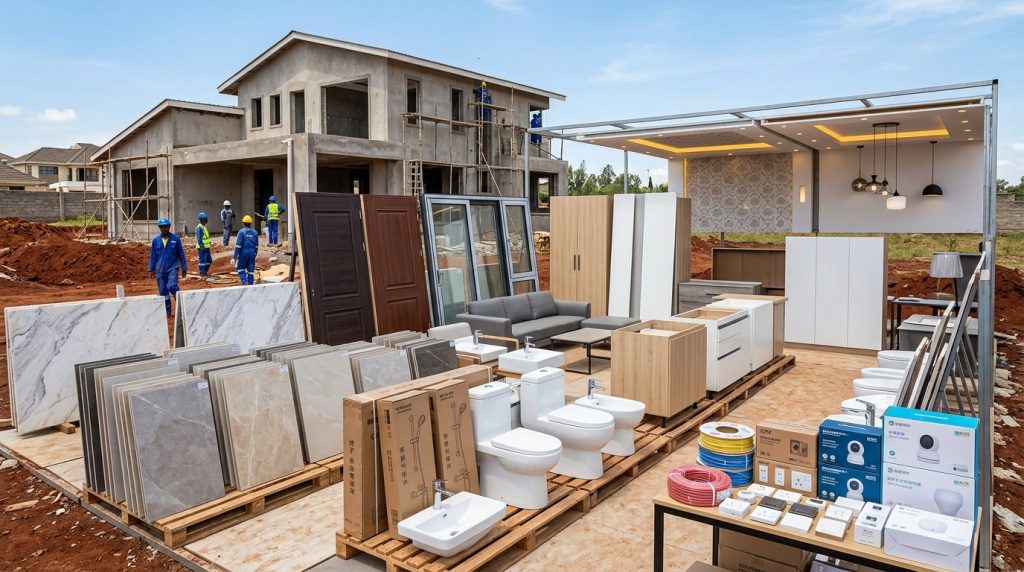
Chinese manufacturers offer a wide range of products suitable for residential construction projects, including:
- Tiles and marble finishes
- Bathroom fixtures and sanitary ware
- Doors and windows
- Kitchen cabinets and wardrobes
- Gypsum ceilings
- Lighting fixtures
- Furniture and décor
- Smart home systems
- Glass and aluminum products
- Electrical accessories
In addition to lower prices, Chinese suppliers also offer large product variety, modern styles, factory customization, and scalable supply options for both small and large projects.
Is Importing Building Materials from China Worth It?
For many homeowners in Kenya, importing building materials from China is worth it when done correctly. The biggest advantage is cost savings. In many cases, imported products remain cheaper than locally purchased materials even after accounting for shipping, taxes, and logistics costs.
However, not every product is worth importing. Heavy raw materials such as cement, ballast, sand, and low-value bulky items are usually better sourced locally due to transport costs. Imported materials become more economical when you focus on finishing products, specialized fittings, customized items, or premium products that are expensive in the Kenyan market.
Importing also makes sense if:
- You want higher-quality finishes
- You need modern or customized designs
- You are constructing multiple units
- You are importing in bulk
- You want to reduce overall project costs
- You are building a high-end or luxury home
Before importing, it is important to compare the total landed cost against local prices. Landed cost includes the product price, shipping, customs duties, clearance charges, transport, and delivery to your site.
Best Building Materials to Import from China
Some building materials offer much better value when imported from China. These are usually high-margin products locally sold in Kenya.
Tiles and Flooring
China is one of the world’s largest producers of ceramic and porcelain tiles. Cities like Foshan specialize in premium tiles for homes, hotels, and commercial buildings. Kenyan homeowners import floor tiles, wall tiles, outdoor paving tiles, SPC flooring, and marble-look finishes.
Bathroom Fixtures and Sanitary Ware
Bathtubs, shower systems, sinks, toilets, bathroom cabinets, mirrors, and faucets are commonly imported from China due to lower prices and modern designs.
Kitchen Cabinets and Wardrobes
Modular kitchen cabinets and customized wardrobes are increasingly popular in Kenyan homes. Chinese factories provide cost-effective options with high-end finishes and customization.
Lighting Fixtures
Pendant lights, chandeliers, LED lighting systems, outdoor lighting, and decorative fixtures are widely imported for residential projects.
Doors and Windows
Aluminum windows, security doors, interior doors, sliding systems, and glass partitions are among the most popular imported construction materials.
Furniture and Décor
Homeowners importing complete finishing packages often source furniture, curtains, décor accessories, and smart home products alongside construction materials.
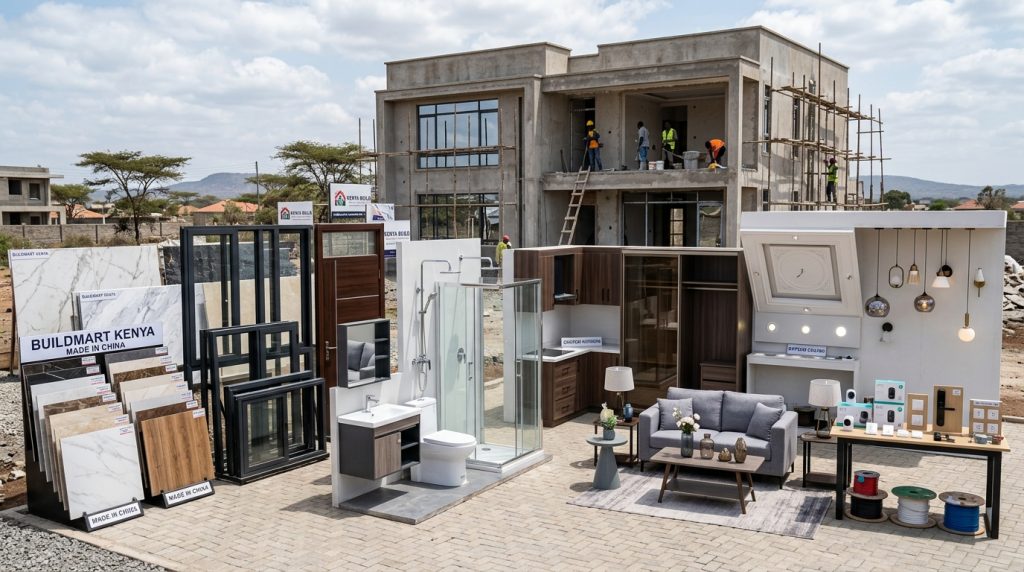
How to Find Reliable Chinese Suppliers
One of the biggest challenges when importing from China to Kenya is identifying trustworthy suppliers. Many first-time importers make the mistake of relying only on attractive photos or low prices without verifying the factory.
Reliable supplier sourcing should include:
- Factory verification
- Business registration checks
- Product samples
- Video inspections
- Supplier communication assessment
- Quality certification review
You can source suppliers through:
- Alibaba
- Canton Fair
- Made-in-China
- Trade agents
- China sourcing companies in Kenya
Working with an experienced sourcing company significantly reduces the risks associated with fake suppliers, low-quality products, delayed shipments, and communication challenges.
Best Chinese Cities for Building Materials Sourcing
Different Chinese cities specialize in different products. Knowing where your materials come from can help improve product quality and reduce sourcing confusion.
Foshan
Best for:
- Tiles
- Sanitary ware
- Lighting
- Furniture
- Kitchens
Guangzhou
Best for:
- Furniture
- Home décor
- Construction accessories
Shenzhen
Best for:
- Smart home systems
- Electronics
- Security systems
Yiwu
Best for:
- Small fittings
- Decorative accessories
- Hardware
Understanding these manufacturing hubs helps buyers source more efficiently while improving supplier quality.
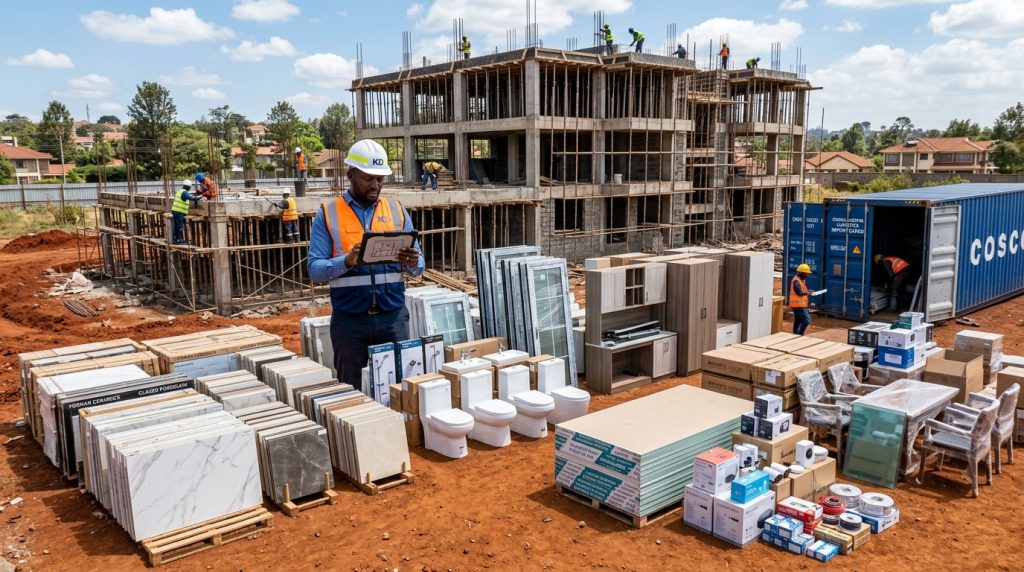
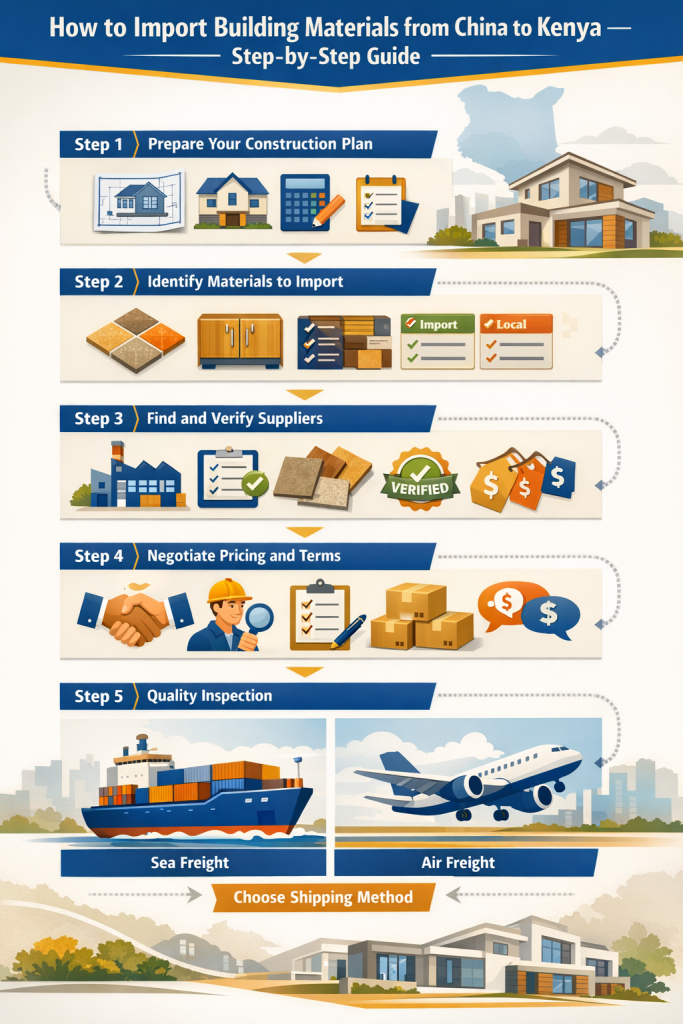
Step-by-Step Process of Importing Building Materials from China to Kenya
Step 1: Prepare Your Construction Plan
Before ordering materials, prepare:
- Architectural drawings
- Interior design concepts
- Material lists
- Measurements
- Budget estimates
Planning early helps avoid incomplete orders and project delays.
Step 2: Identify the Materials You Want to Import
Separate products into:
- High-priority imported items
- Locally sourced materials
- Customized products
- Heavy items unsuitable for shipping
This improves budgeting and shipping efficiency.
Step 3: Find and Verify Suppliers
Never place orders before:
- Requesting samples
- Confirming specifications
- Verifying factory legitimacy
- Comparing quotations
Step 4: Negotiate Pricing and Terms
Chinese suppliers usually expect negotiation. Areas you can negotiate include:
- Product prices
- Minimum order quantities
- Packaging
- Delivery timelines
- Payment terms
Step 5: Arrange Quality Inspection
Quality control is one of the most important steps in importing construction materials. Always inspect goods before shipment to avoid expensive surprises after arrival.
Inspection should confirm:
- Correct specifications
- Product quality
- Packaging condition
- Quantity accuracy
- Branding requirements
Step 6: Choose Your Shipping Method
The most common freight methods include sea freight and air freight.
Sea Freight
Best for:
- Tiles
- Furniture
- Cabinets
- Doors
- Bulk shipments
Sea freight is slower but more affordable for heavy cargo.
Air Freight
Best for:
- Urgent items
- Small electronics
- Samples
- Lightweight products
Air freight is faster but more expensive.
Most residential construction projects rely heavily on sea freight due to volume and weight considerations.
How Long Does Shipping from China to Kenya Take?
Shipping timelines vary depending on:
- Product manufacturing time
- Port congestion
- Customs clearance
- Shipping method
Typical timelines include:
- Air freight: 5–14 days
- Sea freight: 30–60 days
Homeowners should plan imports early to avoid construction delays.
Kenya Import Duties and Taxes
When importing building materials from China to Kenya, several taxes and charges may apply depending on the product category.
These may include:
- Import duty
- VAT
- Import declaration fees
- Railway development levy
- Customs clearance charges
It is important to work with experienced clearing agents or sourcing companies that understand Kenyan customs procedures.
Failure to calculate taxes correctly can significantly affect your budget.
Why Quality Inspection Matters
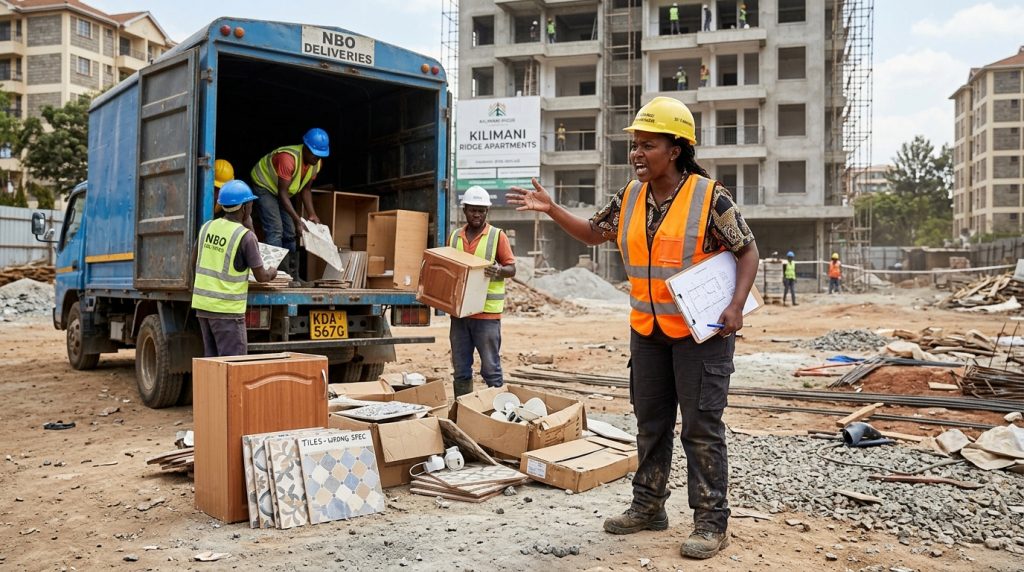
Many people importing from China focus heavily on price while ignoring quality assurance. Unfortunately, low prices sometimes lead to poor-quality products, incorrect specifications, or damaged materials.
Quality inspection protects you against:
- Defective tiles
- Weak fittings
- Wrong dimensions
- Color inconsistencies
- Damaged packaging
- Missing items
For large residential projects, pre-shipment inspection is essential.
Common Mistakes Kenyan Homeowners Make When Importing from China
Ordering Too Late
Construction schedules often suffer because materials arrive after finishing work has already started.
Choosing Suppliers Based Only on Price
Extremely cheap quotations often lead to low-quality products or scams.
Ignoring Product Samples
Samples help confirm product quality before bulk purchasing.
Poor Material Planning
Incomplete orders lead to multiple shipments and increased costs.
Failing to Consolidate Shipments
Combining products into one shipment reduces freight costs significantly.
Not Using Professional Sourcing Assistance
Many homeowners underestimate the complexity of international sourcing and logistics.
How to Reduce Import Costs
There are several ways to lower the cost of importing building materials from China to Kenya.
Consolidate Multiple Products
Instead of shipping products separately, combine them into one container.
Import High-Value Finishing Materials
Focus on products with higher local markups.
Use Sea Freight for Bulk Orders
Sea freight is usually more economical for residential construction projects.
Plan Purchases Early
Avoid expensive emergency air freight by ordering in advance.
Work With Reliable Sourcing Experts
Professional sourcing companies help negotiate better prices and avoid costly mistakes.
Why Use a China Sourcing Company in Kenya
Importing building materials involves many moving parts:
- supplier sourcing
- negotiations
- inspections
- freight coordination
- customs handling
- delivery logistics
A professional sourcing company simplifies the entire process.
Working with a trusted China sourcing company in Kenya helps:
- reduce risk
- improve communication
- verify suppliers
- manage quality control
- streamline shipping
- reduce delays
For homeowners unfamiliar with Chinese sourcing markets, professional guidance can save both time and money.
Final Thoughts
Importing building materials from China to Kenya can significantly reduce construction costs while improving access to modern, high-quality finishing products. Whether you are building your dream home, developing rental units, or completing a luxury residential project, proper planning and supplier verification are essential to success.
The key to successful importing lies in understanding what to import, choosing reliable suppliers, planning logistics early, conducting quality inspections, and managing shipping and customs properly.
With the right sourcing strategy, Kenyan homeowners can access better materials, improve project quality, and complete construction projects more affordably and efficiently.
As more people continue to explore global sourcing opportunities, importing construction materials from China is becoming one of the smartest ways to finish residential projects in Kenya without compromising on quality or design.